Every year, tens of thousands of New Zealand cars reach the end of the road. Some fail a WOF one too many times. Some get written off on SH1 near Waihola. Some just sit on a Mosgiel lawn until the grass grows through the wheel arches. Most owners never find out what happens to the car once the tow truck pulls away.
We collect end-of-life vehicles across Dunedin, Otago and Southland every day, so we've seen the whole process up close. This guide follows a car from your driveway to the steel mill: what gets removed, what gets recycled, what gets reused, what's still a problem, and what you need to do as the owner. It's written for car owners, students, teachers, journalists and anyone curious about how New Zealand deals with old cars.
The Short Version
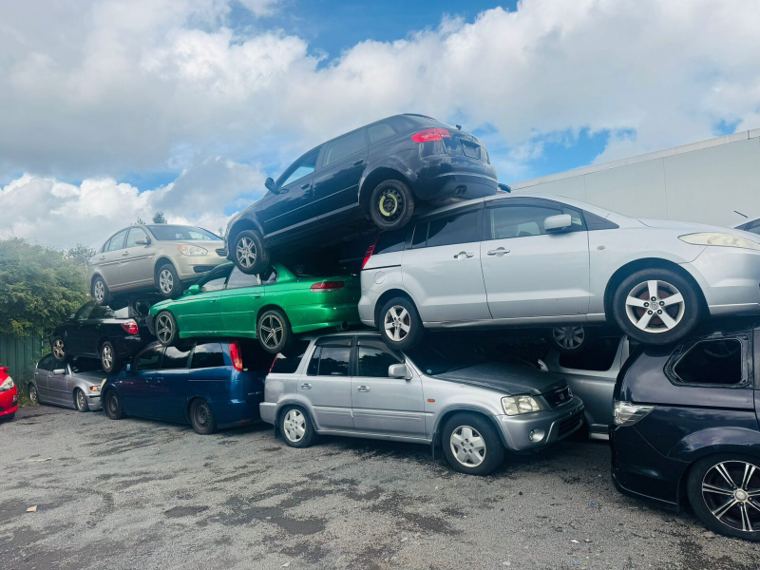
When a car is scrapped responsibly in New Zealand, it is deregistered with NZTA, drained of fluids and stripped of hazardous parts (battery, airbags, AC gas, tyres), picked for reusable spare parts, and then crushed and shredded so the steel, aluminium and copper can be sorted and sent for recycling. By weight, about three-quarters or more of a typical car can be recovered. Most of the rest, mainly plastics, foam, glass and fabric, still goes to landfill. That's the part New Zealand hasn't solved yet.
Why End-of-Life Cars Are a Big Deal in New Zealand
New Zealand runs one of the oldest light-vehicle fleets in the developed world. The average car on our roads is around 15 years old, according to the Ministry of Transport's fleet statistics. Much of the fleet arrived as used imports from Japan. They're often already 8–10 years old when they land, and they keep running here for another decade or more.
That has three effects that matter in Otago:
- A steady flow of cars reaching the end of their lives. Every year a large number of vehicles leave the fleet for good, and every one has to go somewhere.
- Many of them leave in rough condition. Our hills, coastal salt air and frosty Central Otago winters wear cars hard. We cover this in how Dunedin's hills wear cars out and what Otago winters do to a car.
- No national take-back scheme for whole cars. Unlike the European Union, New Zealand has no law that makes car makers responsible for recycling a vehicle at the end of its life. Responsible disposal relies on owners, dismantlers and metal recyclers doing the right thing.
Get it right and an old car becomes raw material for new steel, cheap second-hand parts for Kiwi motorists, and a small win for the environment. Get it wrong and you get a leaking hulk in a paddock, oil in a stormwater drain, or a dumped car on a council roadside.
The 7-Stage Journey of a Scrapped Car
Here's what happens, step by step, when a car is scrapped properly in Otago.
Collection
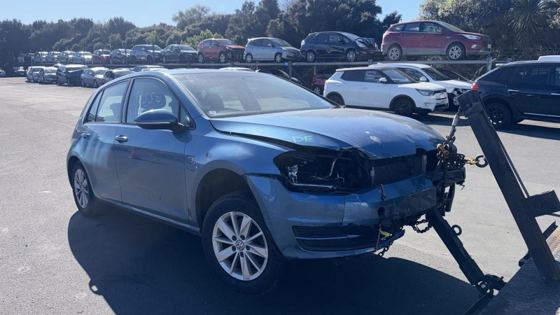
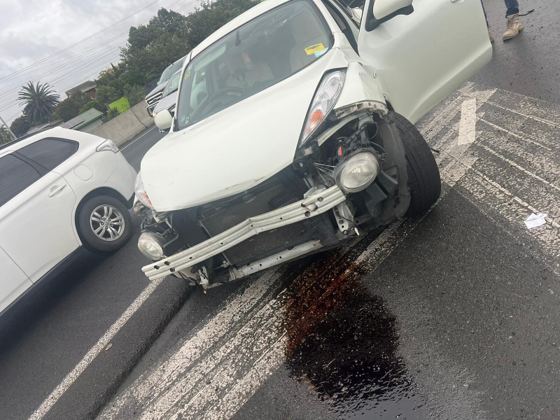
A licensed buyer or removal operator assesses the car (usually from the rego, make, model and condition), agrees a price, and collects it on a tow truck or flatbed. Because it leaves on a truck, the car doesn't need a current WOF or rego, and it doesn't need to run. Ownership changes hands at this point, and the seller should be paid at pickup.
Ownership transfer and deregistration
The registered owner must tell NZTA the car has been sold, so they're no longer liable for it. A car that won't return to the road is then deregistered, which takes it off the motor vehicle register for good, and its plates are taken out of use. If you still have time left on your licence (rego), you can usually apply for a refund of the unused portion. We cover the paperwork in our NZTA vehicle disposal guide, and the official process is on the NZTA deregistration page.
Depollution
This is the most important environmental step, and the one dodgy operators skip. Before anything is crushed, the car is drained and made safe:
- Fuel, engine oil, gearbox and diff oil, brake fluid, power-steering fluid and coolant are drained into separate containers.
- The 12-volt lead-acid battery is removed and sent for lead recycling.
- Air-conditioning refrigerant is recovered with proper equipment instead of being vented. These gases are powerful greenhouse gases, and New Zealand runs a refrigerant recovery programme through Cool-safe.
- Airbags and seatbelt pre-tensioners, which contain small explosive charges, are made safe or removed.
- Tyres and wheels come off. Since 2024, end-of-life tyres have been covered by Tyrewise, New Zealand's regulated tyre stewardship scheme.
- Mercury switches (in some older cars), and on hybrids and EVs the high-voltage traction battery, are removed by trained staff.
Parts harvesting
Next, anything worth reusing comes off: engines, gearboxes, alternators, starter motors, doors, panels, lights, mirrors, wheels, seats and electronics. Popular models such as Corollas, Demios, Swifts, Legacys, Hiaces and Hilux utes are especially valuable for parts. Reuse is better than recycling, because a second-hand alternator that keeps another Dunedin car on the road needs no smelting at all.
Catalytic converter and precious-metal recovery
The catalytic converter contains small amounts of platinum, palladium and rhodium, some of the most valuable metals by weight on the planet. Converters are removed and sent to specialist refiners. (This is also why converter theft has become a problem around New Zealand.)
Crushing and shredding
The stripped body shell is flattened so trucks can carry more of them, then fed into an industrial shredder that tears it into fist-sized pieces in seconds. Magnets pull out the steel and iron. Eddy-current separators and sorting lines recover aluminium, copper (wiring harnesses, motors) and other non-ferrous metals.
Recycling, and the leftovers
The sorted metals are sold as raw material and much of it is exported to steel mills and smelters, where it's melted into new steel and aluminium. Making steel from scrap uses far less energy and raw material than making it from iron ore. What's left over is called automotive shredder residue (ASR, or "car fluff"): plastics, foam, rubber, glass, textiles and dirt. In New Zealand most ASR still goes to landfill.
Got a Car Ready for Its Last Trip?
We collect for free across Dunedin, Otago and Southland, pay cash on pickup, and send every vehicle through approved recycling channels. Running or not, WOF or not.
What's Inside a Car, and Where It All Goes
A typical small-to-medium car weighs somewhere between 1,000 and 1,500 kg. The exact mix varies a lot by age and model (a 2004 Corolla isn't built like a 2020 RAV4 hybrid), but this is roughly how a conventional petrol car breaks down by weight and what happens to each material:
| Material | Approx. share of weight | Where it's found | What happens to it |
|---|---|---|---|
| Steel & iron | ~60–70% | Body shell, chassis, engine block, brake discs, springs | Shredded, magnetically separated, melted into new steel |
| Aluminium | ~5–10% | Wheels, cylinder heads, gearbox cases, radiators, some panels | Separated and re-smelted; very valuable to recover |
| Plastics | ~10–15% | Bumpers, dashboard, trim, fuel tank, light housings | Mostly ends up in shredder residue and landfill |
| Rubber | ~4–6% | Tyres, hoses, seals | Tyres go through the Tyrewise scheme; other rubber mostly to landfill |
| Glass | ~2–3% | Windscreen, windows, mirrors | Laminated windscreens are hard to recycle; mostly landfill |
| Copper & other metals | ~1–3% | Wiring harness, alternator, starter motor, radiator | Recovered and recycled; high value per kg |
| Fluids | ~1–2% | Fuel, oil, coolant, brake fluid | Drained during depollution; oils re-refined or used as fuel |
| Textiles, foam, other | ~3–5% | Seats, carpet, headlining, insulation | Shredder residue, mostly landfill |
Indicative ranges based on typical published breakdowns for conventional passenger cars. Individual vehicles vary, and modern cars tend to have more aluminium and plastic than older ones.
The takeaway: metals are recovered very well, and non-metals mostly aren't. Around three-quarters of a car by weight is metal, which is why old cars are some of the most recycled consumer products in the world, and why the plastics and composites in newer cars are the industry's next big challenge.
The Hazardous Stuff (and Why Backyard Wrecking Is a Bad Idea)
A dead car sitting on a section isn't harmless. Here's what's in it and why each item needs proper handling:
| Item | The risk | Proper handling |
|---|---|---|
| Engine & gear oil | A small amount can contaminate a large volume of water; toxic to aquatic life | Drained and collected for re-refining or energy recovery |
| Coolant (antifreeze) | Sweet-tasting and highly toxic to pets and children | Drained into sealed containers for treatment |
| Fuel | Fire and explosion risk; groundwater contamination | Drained with proper equipment, reused or disposed of safely |
| Lead-acid battery | Lead and sulphuric acid | Removed whole and sent for lead recycling |
| AC refrigerant | Potent greenhouse gas if vented | Recovered with certified equipment |
| Airbags & pre-tensioners | Contain explosive charges that can injure | Deployed or removed safely by trained staff |
| Hybrid/EV battery | High voltage; fire risk if damaged | Isolated and removed by trained technicians for reuse or recycling. See our hybrid & EV guide |
This is why stripping a car in the backyard and leaving the shell for "someone" to collect is a bad idea. Fluids end up in the soil and in the stormwater drains that flow to Otago Harbour and our rivers. And a car abandoned on a road or public land can be removed by the council, with the costs potentially passed on to the last registered owner.
How New Zealand Compares With Europe and Japan
New Zealand's approach is mostly market-driven: scrap metal and parts have value, so cars get recycled because it pays. That works well for metals. It's weaker for everything else.
- European Union. The EU's End-of-Life Vehicles rules make producers responsible for take-back and set legal targets for reuse, recycling and recovery (up to 95% of vehicle weight). Owners must get a certificate of destruction from an authorised facility.
- Japan. Japan's Automobile Recycling Law, in force since 2005, has buyers pay a recycling fee up front when a new car is sold. The fee funds proper handling of shredder residue, airbags and refrigerants when the car is scrapped.
- New Zealand. No equivalent whole-of-vehicle scheme yet. The government has declared several priority products for product stewardship that overlap with cars, including tyres, refrigerants and large batteries (which covers EV batteries). Tyres became the first to have a regulated scheme, Tyrewise, in 2024.
Because so many Kiwi cars start life in Japan, any recycling fee paid on a car in Japan doesn't follow it to New Zealand. As EVs and hybrids reach the end of their lives in bigger numbers, handling batteries properly will become one of the biggest questions for the industry here.
The Owner's Checklist: Before Your Car Is Scrapped
Save or print this before the tow truck arrives:
- Find your ownership details and photo ID. A legitimate buyer will ask for them, and so they should.
- Clear any finance owing. A car with money owing on it can't be sold with clear title. Check the Personal Property Securities Register if you're unsure.
- Empty the car completely. Check the glovebox, door pockets, under the seats, boot well and spare-wheel well. Sunglasses, parking cards and documents are the most common things left behind.
- Wipe your data. Unpair your phone, clear saved addresses in the sat-nav (especially "Home"), and log out of any connected car app.
- Take garage remotes, e-tags and toll accounts out of the car.
- Decide about personalised plates before the sale if you want to keep them.
- Cancel your insurance once the car has gone. You may get a partial refund.
- Notify NZTA of the sale (or confirm your buyer has done it with you) so you're no longer liable for tickets, tolls or rego.
- Apply for any licence (rego) refund once the vehicle is deregistered, if there's time left on it.
- Ask where the car is going. A responsible buyer will happily tell you how the car is depolluted and recycled.
5 Myths About Scrapping Cars
Even a non-running, unregistered car contains a tonne or more of recyclable metal plus parts with resale value. In Otago, most old cars still earn the owner cash. See what yours could be worth in our 2026 Otago price guide.
With reputable buyers, removal is free and you get paid. If someone asks you for a "towing fee" for a complete car, get another quote.
You need a WOF to sell a car that will be driven away. You don't need one to sell a car for scrap or removal, because it leaves on a truck. Details in selling without a WOF.
Most of a car's weight is metal and gets recycled. The non-metal leftovers are the part that mostly ends up in landfill, and that's where the industry still needs to improve.
Not until NZTA has been told about the change of ownership. Until then, tickets and liabilities can still land with you.
Get a Free Cash Quote
✅ No obligation • Callback in 60 seconds • All Dunedin suburbs
Frequently Asked Questions
What happens to my car when it is scrapped in New Zealand?
It is deregistered with NZTA, then drained of fluids and stripped of hazardous parts like the battery, airbags, AC refrigerant and tyres. Reusable parts are removed for resale, the catalytic converter goes for precious-metal recovery, and the shell is crushed and shredded so steel, aluminium and copper can be sorted and recycled into new metal.
How much of a car can be recycled?
Roughly three-quarters or more of a typical car by weight can be recovered, mainly because most of its weight is steel, iron and aluminium. Plastics, foam, glass and textiles are much harder to recycle and mostly end up as shredder residue in landfill.
Do I need to deregister my car before scrapping it?
The car needs to be taken off the register when it's permanently leaving the road, and you must tell NZTA it has been sold so you're no longer liable. A reputable car buyer will walk you through it at pickup. Our NZTA disposal guide covers the details.
Can I get a rego refund when my car is scrapped?
Usually, yes. If your vehicle licence still has time left when the car is deregistered, you can generally apply to NZTA for a refund of the unused portion.
Is it illegal to leave an old car on my property?
Not automatically. On your own land a stored car is generally your business, but leaking fluids can cause environmental harm, and councils can act on nuisance or abandoned vehicles, especially on public land or roads. Getting it collected and recycled is usually the simplest fix.
What happens to hybrid and EV batteries at end of life?
Trained technicians make high-voltage batteries safe and remove them. Depending on condition, they may be reused, repurposed (for example as stationary storage) or sent for recycling to recover metals like nickel, cobalt and lithium. Large batteries are a declared priority product for product stewardship in New Zealand.
Do you pay cash for scrap cars in Dunedin?
Yes. We pay cash for scrap, damaged and non-running cars across Dunedin, Otago and Southland, with free removal. Call 0800 600 067 or get a free quote online.
Cite or Share This Guide
Teachers, students, journalists and community groups are welcome to reference this guide. If you use it, please link back to the original page:
Cash For Cars Dunedin (2026). What Happens to Your Car When It's Scrapped? Inside New Zealand Car Recycling. https://cashforcarsdunedin.net.nz/blog/what-happens-to-scrapped-cars-nz/HTML link:
<a href="https://cashforcarsdunedin.net.nz/blog/what-happens-to-scrapped-cars-nz/">What happens to a scrapped car in NZ</a> – Cash For Cars DunedinSources & Further Reading
Keep Reading — Dunedin Car Guides
We buy and collect vehicles in every condition across Dunedin, Otago and Southland, and send end-of-life cars through approved depollution and recycling channels. This guide is based on what we see on the job every day. It's general information, not legal advice. Check NZTA and your local council for the latest rules.